
In the first part, we focused on the key components and strategies for creating a product vision. Today, we’d like to focus on how to work with a product vision and where it can best be integrated into agile software development.
The product vision not only serves as a guide for product development but, when used correctly, also plays an important role in various phases of the product life cycle. From defining the product strategy to the operational development of the product, the vision can serve as a point of reference. It ensures that all activities are aligned with the realization of the vision.
A key aspect of working with a product vision is regularly reviewing whether the vision has already been achieved or whether adjustments are still needed. Key metrics can be derived from the vision to measure progress, success, and the value added for the product’s users.
Examples of Key Metrics:
- Number of times the product has been used
- User Satisfaction
- the quantifiable added value that the product offers
By regularly measuring and analyzing key metrics, the development team can better understand how well the vision is being implemented and which areas may need improvement. Overall, working with a product vision enables a focused and strategic approach to product development.
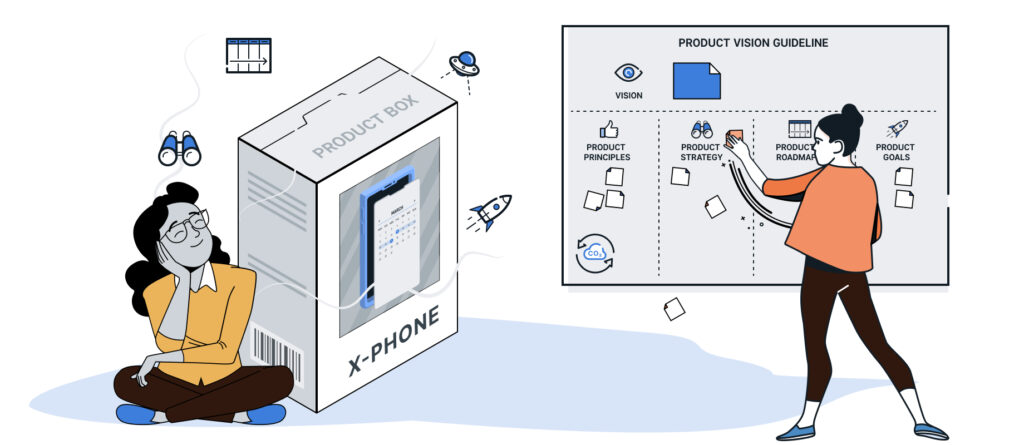
In the following, we will explain in more detail the significance and practical application of product principles, product strategy, product roadmap, and product goals for the development and implementation of product visions in agile software projects.
Product Principles
Product Principles are the fundamental values and beliefs that should underpin every action and decision related to a product. They provide the framework that guides the product’s direction and development and ensures that everyone involved is working toward the same goal.
By providing clear guidelines for action, Product Principles enable consistent and focused product development. They serve as a point of reference for the entire development team and help set priorities and make decisions that align with the underlying product vision.
Examples of Product Principles:
- „Whenever possible, we prefer to use sustainable and environmentally friendly solutions.“
- This principle underscores the company's commitment to environmental protection and sustainability and emphasizes the development of products that minimize environmental impact.
- „Our customers are more important to us than our marketplace partners.“
- This principle emphasizes the importance of customer focus and underscores the commitment to developing products that meet customers' needs and desires, even if this might lead to conflicts with other partners.
- „Our product is mobile-first.“
- This principle stipulates that the mobile user experience is the top priority during product development. This reflects the importance of mobile technologies today and ensures that the product is optimally tailored to the needs of mobile users.
Product principles form an important foundation for successful product development. They clearly define the company's values and beliefs and ensure that these are taken into account at every stage of the product life cycle.
Product Strategy

Once the Product Principles have been established, work can begin on developing a Product Strategy. The Product Strategy builds on the previously defined principles and places them in a broader context. It defines the long-term goals, directions, and actions needed to achieve the desired results and successfully implement the vision.
To be effective, a good product strategy should include three key elements:
- Diagnosis: This element defines or explains the challenges and obstacles that need to be overcome. It is important to conduct a clear analysis of the current situation in order to understand the underlying problems and develop targeted solutions.
- Mission Statement and Guidelines: This section sets forth the values, principles, and guidelines that the development team should follow. They serve as a framework for addressing the identified challenges and chart the course for product development.
- Actions: This element comprises a set of specific actions designed to help fulfill the mission statement and address the defined challenges as effectively as possible. It includes strategic decisions and activities aimed at realizing the product vision and achieving the desired results.
Product strategy is an essential tool for ensuring clear direction and focus in product development. By integrating analysis, a mission statement, guidelines, and specific actions, the development team can work effectively toward realizing the product vision and successfully respond to challenges.

Product Roadmap
The product roadmap is essential for outlining the next steps in product development and establishing a strategic roadmap for the development team. It specifies the order of priorities and ensures that the product vision is reflected in future activities.
A comprehensive product roadmap answers key questions and provides clarity for the entire development team:
- Why are we working on a particular challenge? The roadmap should clearly communicate the product's strategic goals and challenges to ensure that all team members understand the overarching goal and work toward it.
- What's next? It outlines the next steps and milestones that must be achieved to realize the product vision. This allows the development team to track progress and set priorities.
- Why is this task being done first, rather than another one? The roadmap explains the order of the planned activities and provides insight into why tasks are prioritized. It helps ensure that resources are used efficiently and that the most important challenges are addressed first.
The product roadmap serves as a guide for the entire development team and helps ensure that everyone works together toward achieving shared goals. It provides direction, transparency, and a clear focus on the product vision, which is essential to a product’s success.
Product Goal
The product goal is derived from the product vision and applies for a period of 6 to 12 months. It describes the specific value the product is intended to deliver within this timeframe and serves as a reference point for aligning all of the development team’s work toward that goal. The focus is on defining the value rather than on the concrete implementation of a solution.
A meaningful product goal should be clearly and precisely worded and make the benefits to users or customers clear. It serves to set the direction for product development and ensure that all activities are focused on creating this added value.
Examples of Product Goals:
- „Through us, people can understand how much electricity they have generated themselves.“
- „Our customers can network with others, including those in the DACH region.“
- „Erik can also include online purchases in his consumer analysis.“
The examples illustrate how the product goal describes the specific value the product is intended to provide, without committing to a specific implementation of a solution. It thus provides clear direction for the development team and helps ensure that the work is effectively focused on achieving the defined goals.
How do I get started?
To begin developing a product vision, it is essential to take a structured and participatory approach that involves all relevant stakeholders. Here are a few steps that can help:

- Jointly prepared by: The process of developing the product vision should be initiated in collaboration with all stakeholders. It is important to designate a facilitator for this process. The facilitator ensures that the discussion stays on track and helps everyone stay focused.
- Communication: The product vision should be shared as often as possible to ensure that everyone is familiar with it. Only when communicating the vision starts to feel like it’s happening too often have you likely reached the right frequency.
- Management Accounting: Regular monitoring helps verify how well the development team is moving toward the product vision. This allows for adjustments to be made and ensures that everyone stays on track.
- Integration into the workplace: The vision should be incorporated into strategic and day-to-day work, for example, by setting sprint goals derived from the product vision or the product goal.
- Dialogue and Reflection: To ensure that everyone involved shares a common understanding, regular discussions about the vision and an exchange of ideas on the subject are essential.
- Sprint Goals and Reviews: It is important to define sprint goals that are directly derived from the product vision or the product goal. Reviews help you reflect on how close you have come to realizing the vision.
- Open Communication: Sharing key metrics and observations with all stakeholders creates transparency and fosters an understanding of progress.
- Inclusion in the planning process: To ensure that the product vision serves as a guide for all decisions and activities, it should be reiterated at the beginning of each planning session.
- Visual representation: Displaying the product vision in the team room helps keep it front and center and raises awareness of it.
By following these steps, you can ensure that the product vision is clearly defined, understood by everyone, and serves as a guide for the entire product development process.
A clear product vision is the key to success in agile software development projects. It establishes a shared direction and ensures that everyone on the team knows where they’re headed. Through regular communication and a shared understanding of the vision, teams can collaborate effectively and set priorities. A product vision is a practical tool that helps achieve goals and better understand users and customers. Ultimately, it acts as a compass, guiding the team through the challenges of software development. With it, software projects that truly make a difference can succeed.