Industry-Specific Services

Industrysoftware

Industrial Software for Manufacturing, Mechanical Engineering, and Industry 4.0

Industry 4.0 Software Development

Whether it’s industrial software for manufacturing processes, machine software, digital platforms, or connected Industry 4.0 solutions: We develop custom software rather than rigid, off-the-shelf solutions. This results in scalable systems that adapt precisely to your processes, machines, and requirements—from IT consulting and UX design to technical implementation.

Our References in the Field of Industrial Software

Custom industrial software, factory software, machine software, and Industry 4.0 software development

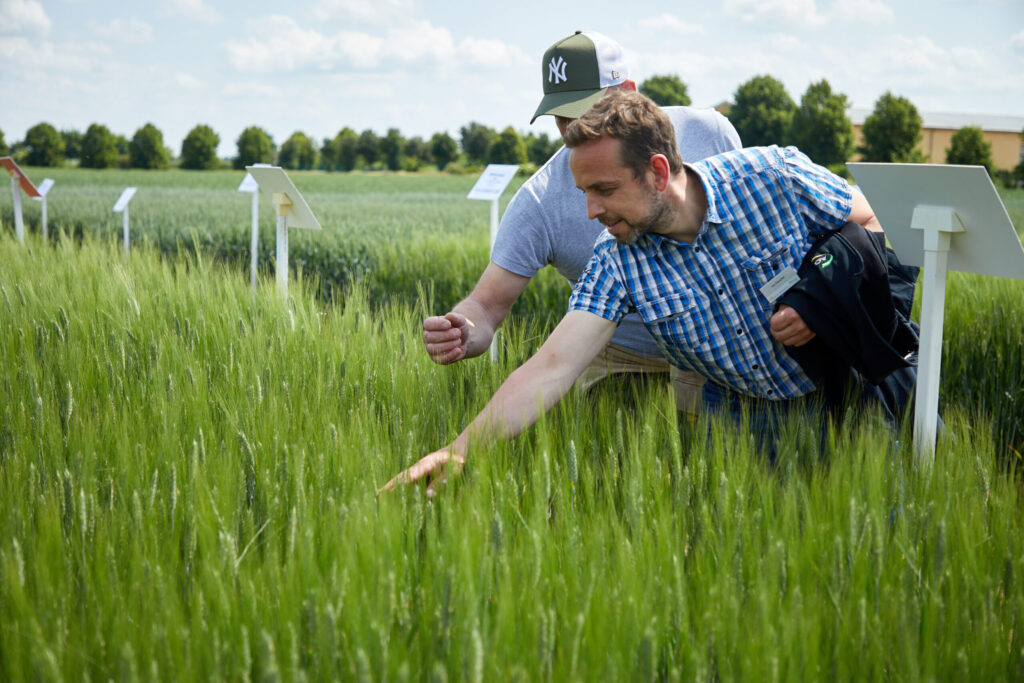
People in a field are walking across the grass

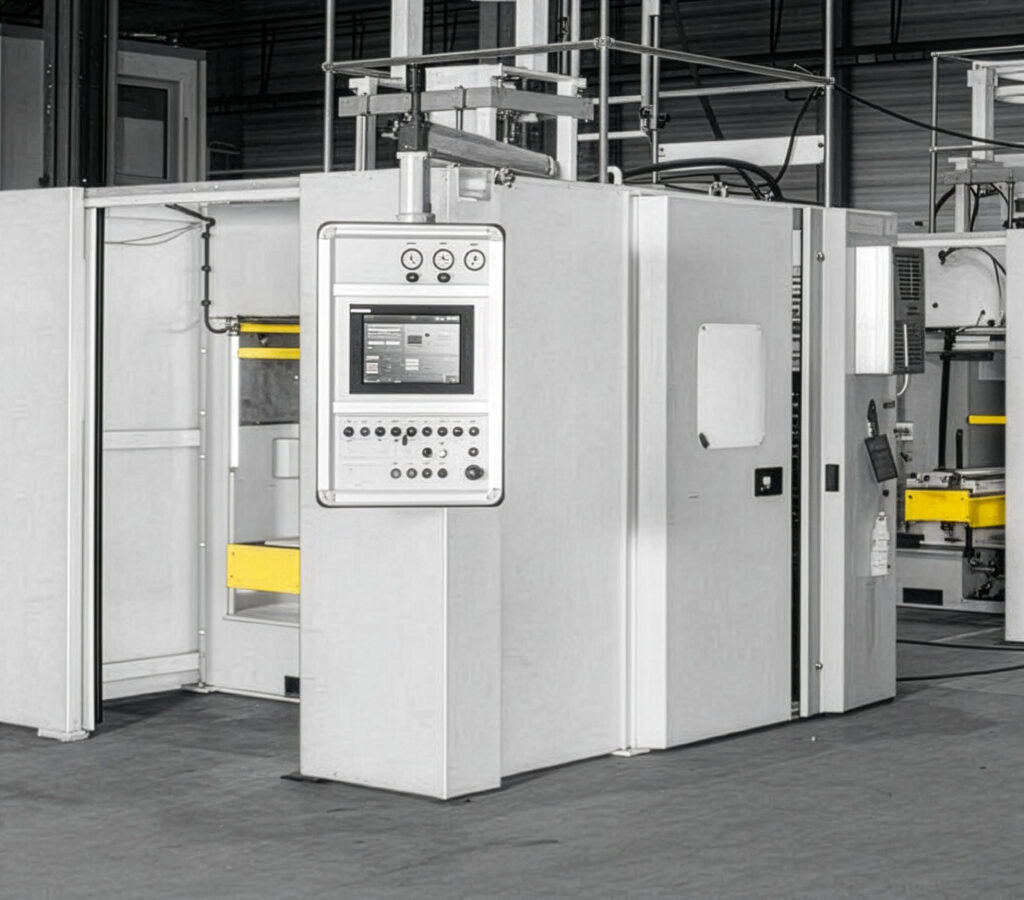
Programmable Logic Controllers (PLCs) for Factory and Process Automation

How we developed a PLC-compatible IT architecture for the Bindewald & Gutting Milling Group and rolled it out into live operation using automated deployment …

HMI Core Shooting System

HMI System User Interfaces


How we redesigned the user interfaces of HMI systems for Laempe Mössner Sinto with a user-centered approach …

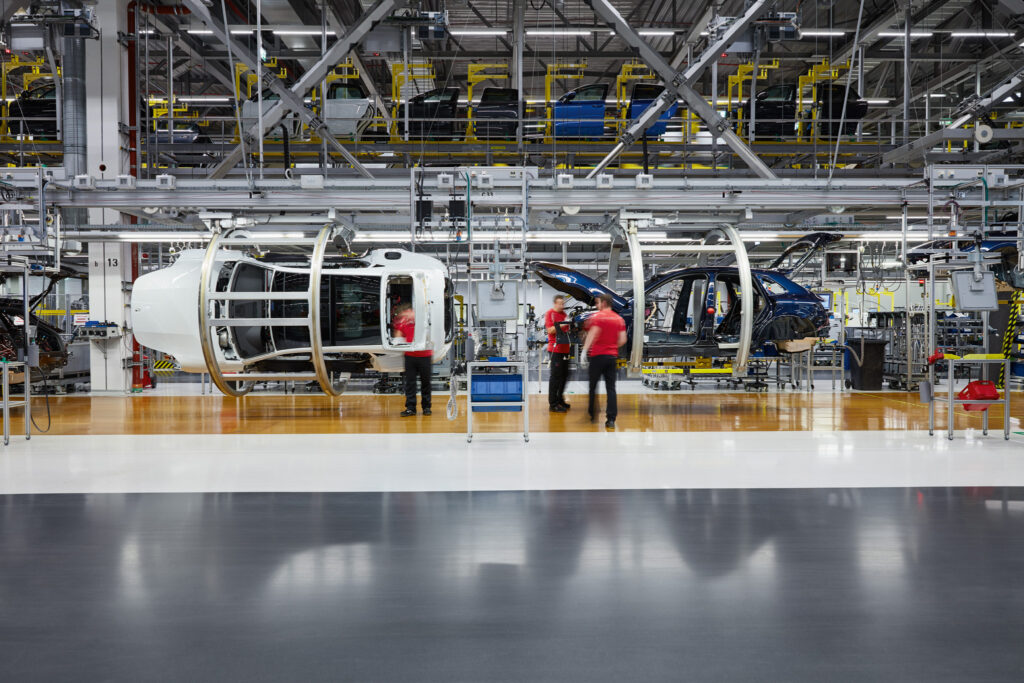
Automobile Manufacturer Plant

Digitization of Production Processes

Digitization of production processes at a plant operated by a renowned German automaker—including prototyping and evaluation of innovative technologies. …

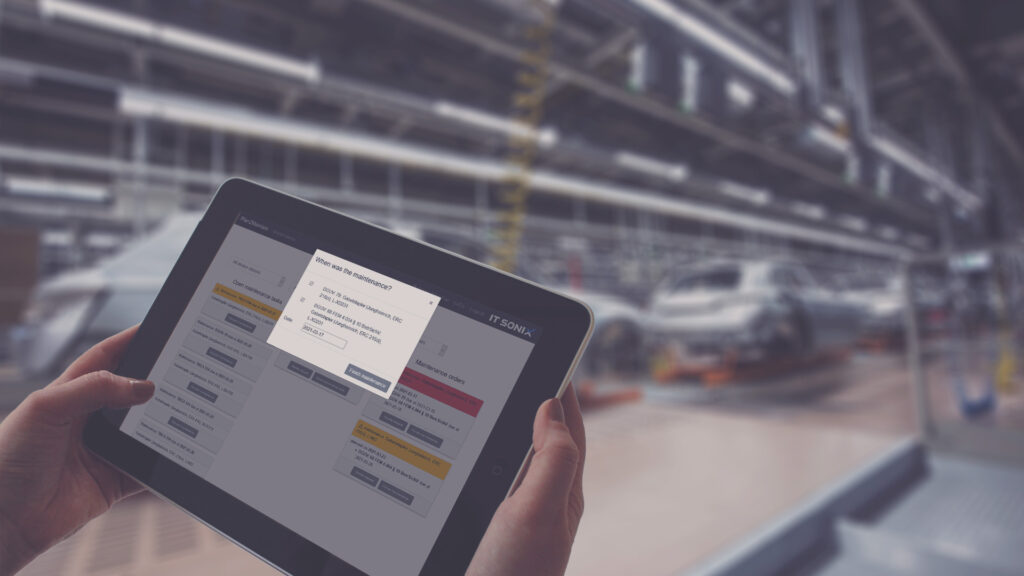
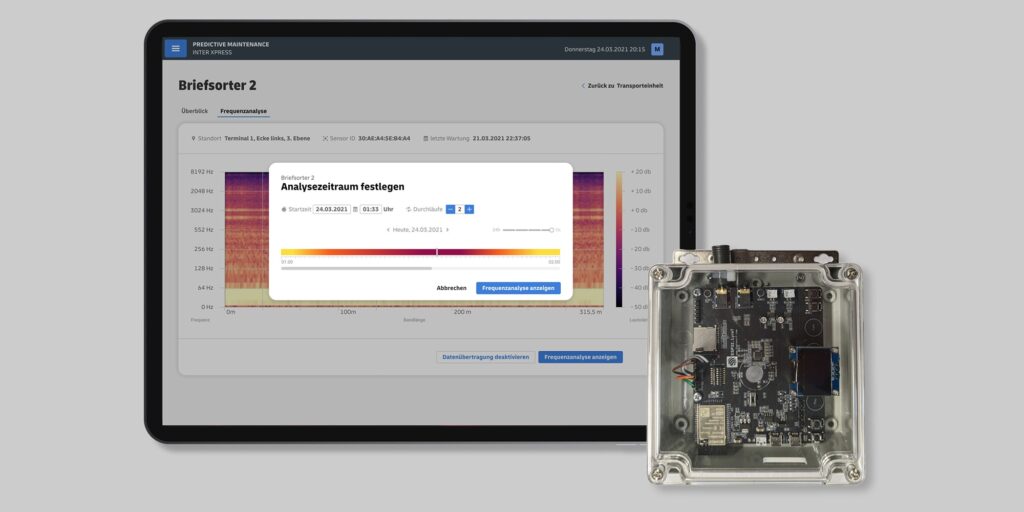
Predictive Maintenance System with Sensor for Assembly Lines

Predictive Maintenance for Industrial Belts

Automated Forecasting for Assembly Lines Using Data Science …

Smart Industrial Software  for your company

From the Current State Analysis to the Prototype
0 Months
Production employees benefit from our solutions
0 +
We offer full-service solutions: front-end, back-end, AI, and consulting
0 Team
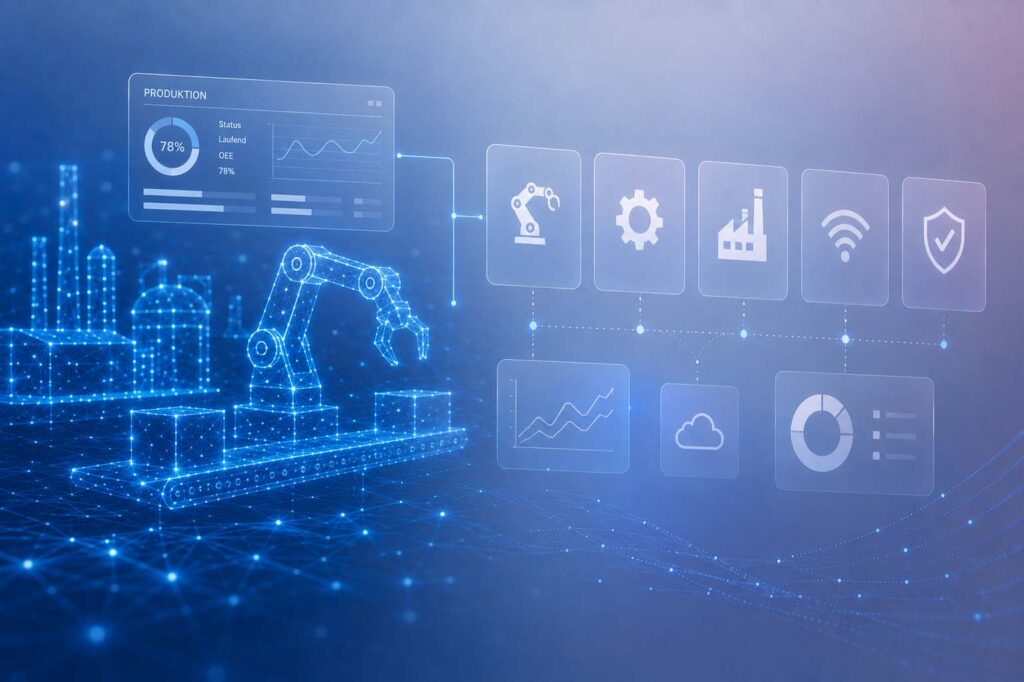
Illustrative image: Industrial software for a digital factory with interfaces

Typical Challenges in Industrial Software Development

Our industrial IT solutions enable companies to implement features tailored precisely to their specific needs. Rather than adapting processes to an existing system, the software is customized to the actual workflow in your production environment or elsewhere.

Icon Software
Data silos between warehousing, transportation, and scheduling
Icon Code
Lack of interfaces to machines and equipment
Media Discontinuities Between Systems​
Icon Documents
Lack of transparency regarding production data
Inflexible off-the-shelf software​
Icon Service Providers
Security Requirements in Production Environments

Icon Concepts
High Level of Manual Effort in Processes
Scaling Icon
Non-scalable software solutions
Icon Software
Challenges in Digitizing Existing Processes

Lack of Integration of Industry 4.0 Technologies

Lack of user-friendliness in existing systems
Complex System Environments​

Why is customized industrial software better than off-the-shelf software?

Why Custom Industrial Software Leads to Greater Long-Term Success for Manufacturing Companies

Off-the-shelf software often covers only general requirements and quickly reaches its limits, especially in complex production and industrial environments. Processes must be adapted, workarounds created, or additional systems integrated. This results in unnecessary complexity, inefficient workflows, and long-term limitations.

Custom industrial software, on the other hand, is tailored precisely to existing requirements, machinery, and internal processes. Its functions, interfaces, and user interfaces are modeled after real-world workflows, thereby creating significantly more efficient processes. At the same time, this results in scalable systems that grow with the company and can be flexibly expanded.

In the field of industrial software development in particular, lasting benefits arise when software is viewed not as a rigid product, but as a customized digital infrastructure for production, data management, and process control.

Interface

Our Core Competencies in Industrial Software

As a full-service partner, we develop customized industrial software across the entire digital value chain—from strategic planning to technical implementation.

01

IT Consulting & Digital Strategies

  • Analysis of Existing Processes and System Landscapes
  • Digitization of Industrial Processes
  • Industry 4.0 Roadmaps
  • Selection of Appropriate Technologies and Interfaces

02

Custom Software Development for Industry

  • Production Software and Factory Software
  • Machine Software and Control Systems
  • Web Platforms for Industrial Companies
  • Custom ERP and MES Extensions
  • IoT and Real-Time Applications
  • Dashboards and Monitoring Solutions
  • Interface Development and System Integration
  • Mobile Applications for Manufacturing and Service

03

AI Solutions for Industry & Manufacturing

  • AI-powered process automation
  • Predictive Maintenance
  • Data Analysis and Pattern Recognition
  • Smart Production Analysis
  • Automated Quality Control
  • AI-Supported Decision-Making Processes
  • Processing Large Volumes of Production Data

04

Cybersecurity for Industrial Systems

  • Protecting Networked Production Environments
  • Secure Interfaces and Data Communication
  • Access Policies and Rights Management,
  • Securing Industry 4.0 Infrastructures
  • Data Protection and Compliance Requirements

05

UX Design for Industrial Software

  • User-Friendly Interfaces for Complex Systems
  • UX/UI Design for Manufacturing and Industrial Applications
  • Optimization of Operating Processes
  • Role-Based Interfaces
  • Visualization of Complex Data
  • Dashboard and Control Room Designs
  • Mobile UX for Service and Maintenance Applications
  • Reducing Operator Errors Through Intuitive Interfaces

Current Topics

What makes for good factory software in Industry 4.0?

Effective factory software, tailored to your specific processes, connects your machines, systems, and production data through customized software solutions to form an intelligently networked infrastructure. It makes your data available in real time, automates your processes, and enables you and your employees to manage your production workflows more efficiently.

To achieve this, we use industrial software to connect your machines, sensors, ERP, and MES systems via interfaces and industrial communication standards. You can then centrally process, visualize, and analyze the resulting data—for example, through dashboards, monitoring systems, or automated workflows. To make the technical improvements measurable, we use standard industry metrics such as: 1. OEE (Overall Equipment Effectiveness), 2. lead time, 3. Setup and downtime, 4. First-pass yield (FPY), 5. Data latency (real-time capability of the software), 6. Defect and rework rates, 7. Data availability / data quality

Artificial Intelligence Consulting at ITSonix

Typical Technologies & Interfaces

When Custom Software Is a Better Fit Than Off-the-Shelf Software.

Industrial software stands or falls on its ability to integrate seamlessly into existing system landscapes. That is why we rely on proven technologies and open interfaces to connect your machines, production systems, and enterprise software.

Typical standards we work with include REST APIs for web-based systems, OPC UA for industrial machine communication, and traditional ERP and MES integrations—for example, with SAP or similar systems. These interfaces enable the reliable exchange of production data, orders, or machine statuses and their real-time processing.

Simpler integrations are usually carried out using documented APIs or standard protocols that can be quickly connected. Things become more complex when dealing with proprietary legacy systems, closed machine control systems, or IT structures that have evolved over time.

In this context, custom software development is crucial for extending missing interfaces, converting data, or creating entirely new integration layers.

Your Questions, Our Answers:

What is industrial software, and how does it differ from standard software?

Industrial software refers to specialized applications for production, machinery, and industrial processes. Unlike standard software, it is not designed generically but is tailored precisely to existing workflows, machines, and systems. This allows production processes to be managed more efficiently, data to be utilized more effectively, and specific requirements to be met without the need for workarounds.

Custom industrial software is particularly worthwhile when off-the-shelf solutions reach their limits—for example, in complex production processes, environments with many systems, or situations requiring specialized machine integrations. Typical long-tail search queries such as „When is custom software worthwhile for production?“ or „Off-the-shelf software vs. custom industrial software for Industry 4.0“ highlight precisely this need: As soon as processes can no longer be accurately mapped or too many manual workarounds are required, a tailor-made solution makes more economic sense.

The connection is typically established via interfaces such as OPC UA, REST APIs, or direct ERP and MES integrations (e.g., SAP). Frequent search queries such as „connecting machines to software via OPC UA“ or „ERP interface for production software integration“ show that this integration is crucial. For modern systems, the connection is standardized; for older or proprietary machines, custom adapters or integration layers are developed.

Yes, existing systems can be gradually modernized through custom software development without having to replace them entirely. Typical questions such as „How can we modernize legacy industrial software without changing the system?“ or „How can we integrate old production software with new systems?“ pertain precisely to this approach. In this process, existing systems are expanded via interfaces or supplemented with modern modules, enabling a step-by-step transformation.

Custom-developed industrial software can generally be adapted much more effectively to specific security requirements. Frequent search queries such as „industrial software cybersecurity requirements for production“ or „how secure is Industry 4.0 software“ highlight the relevance of this issue. Security concepts are integrated from the very beginning—for example, through role-based access, encrypted data transmission, and secure industrial networks. This results in a significantly higher level of control and protection than with generic, off-the-shelf solutions.

Get Started on Your Project

Contact Us
Sebastian Wetzel, Head of Sales and Marketing
Contact Person

Sebastian Wetzel

Head of Sales & Marketing · IT Sonix

We understand that every project is unique. Our experts look forward to speaking with you to find customized solutions.

Home
Company