
Industry-Specific Services
Energysector
Custom Software Solutions for the Energy Sector
Custom Software for Energy Providers
The energy industry is changing rapidly: decentralized generation, volatile loads, increasing regulatory requirements, and complex IT landscapes are presenting companies with new challenges. Custom software provides tailored solutions that are aligned with your processes, assets, and systems.
We partner with market-leading energy providers and offer our customers efficient and future-proof solutions for their highly complex energy-system-specific processes.
Our References in the Energy Sector
Learn more about our work with municipal utilities, energy providers, manufacturers of storage systems, and many others.
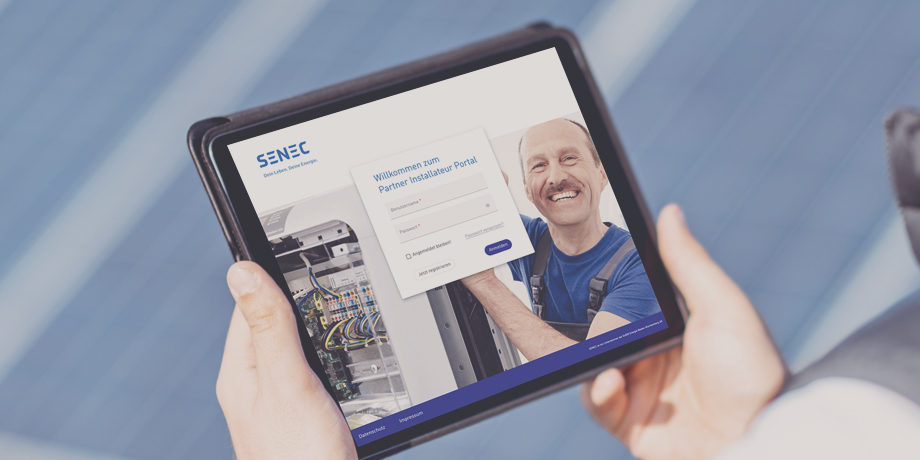
Software for Partner and Installer Portals
Modernization, redesign, and Kubernetes migration of a central sales tool for more than 1,100 field sales partners. …
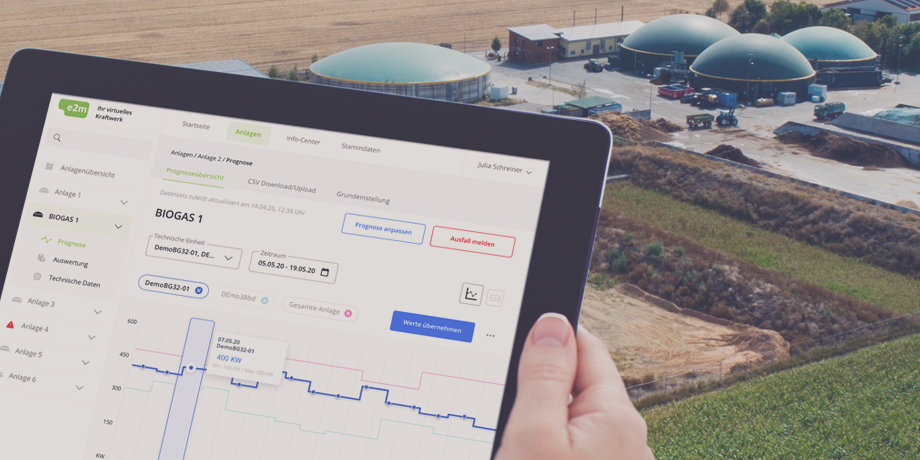
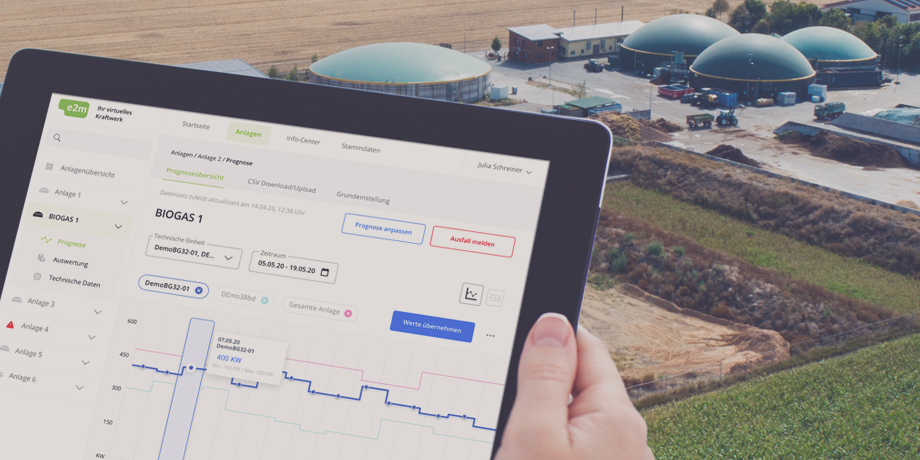
Customer portal software for virtual power plants
New Customer Portal for e2m: Management and Forecasting of Thousands of Decentralized Generation Plants in the Virtual Power Plant. …

IoT Platform for Energy Storage Systems
Real-time communication for thousands of storage units in the field — a scalable IoT platform with intelligent electricity price optimization …
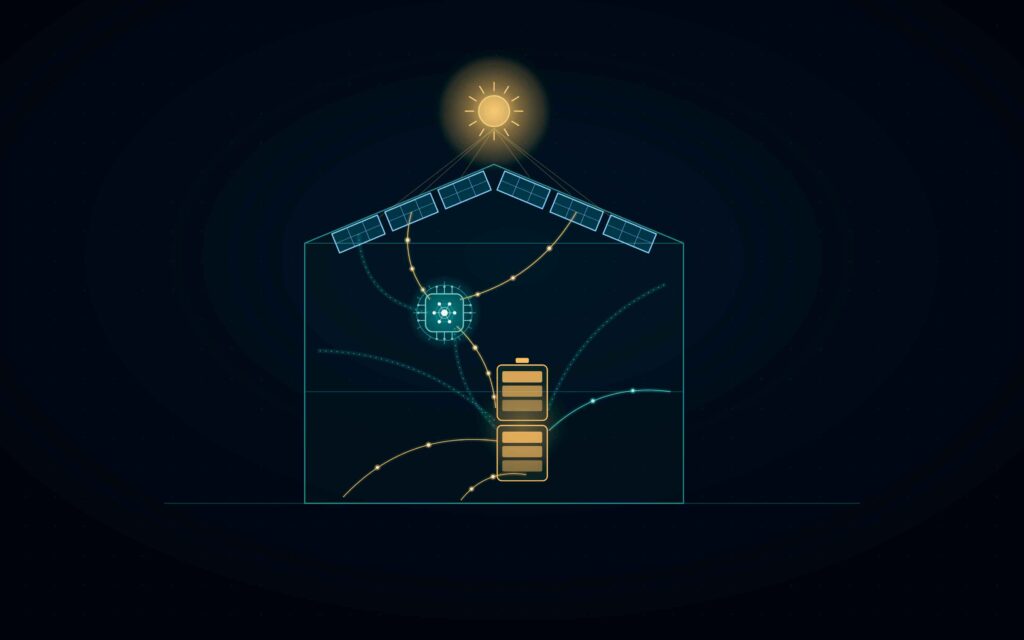
AI-Driven Predictive Maintenance for Energy Storage Systems
AI-powered failure prediction for energy storage systems in the field — developed, trained, and deployed in live operations. …
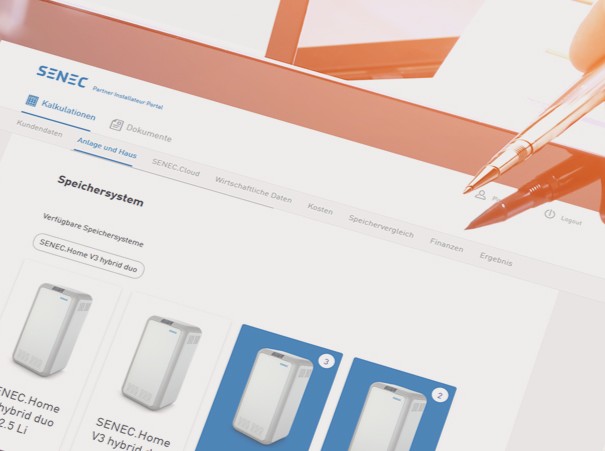
Billing Engine: Digital Billing System
Our billing engine for SENEC: a custom-built billing system for complex energy contracts. …
Digital Energy Systems with Real-time data
Why Custom Software Is a Better Fit for You
Off-the-shelf software often reaches its limits in the energy sector, because processes, data models, and integration requirements vary greatly from company to company.
Custom software precisely replicates the functions, that are relevant to your use case, rather than settling for generic features.
In particular for complex requirements A customized solution offers clear advantages in areas such as grid logic, plant control, forecasting, market communication, and regulatory reporting.
This is how they are created Systems that adapt to your business processes — not the other way around.
Custom software helps you connect different systems and data sources:
Custom software solutions enable the integration of various systems in the energy industry through tailored interfaces and an architecture that is precisely aligned with your existing IT landscape. This allows data from ERP, SCADA, IoT, GIS, or energy management systems to be consolidated, standardized, and made available for centralized use.
The major advantage is that it is not the standard software that dictates your processes, but rather the solution is tailored to your workflows. This results in seamless data flows, greater transparency, and a significantly simpler foundation for analysis, automation, and operational decisions.
Current Topics

White Paper
Energy Systems: Off-the-Shelf Software vs. Custom Solutions
We'll show you where SAP's standard solutions are sufficient, and where customized solutions are the better fit for the energy transition….
Innovative Real-Time Software Platform (IoT) for the Energy Storage Systems of Tomorrow
Real-time software platforms for the energy storage systems of tomorrow: Over the years, SENEC has developed five core areas – ranging from the storage platform to billing and the partner portal.
Success Story
AI-Based Maintenance System for Energy Storage Systems
A neural network, trained on real-world data from more than 75,000 energy storage systems, identifies devices in the field that require maintenance before they fail. The project also included the handover of infrastructure to SENEC.
Success Story
Development of a Partner Plumber Portal
The core sales tool used by more than 1,100 SENEC resellers has been completely modernized—featuring a new design, a responsive Angular front end, and a Kubernetes migration performed without interrupting operations.
Success Story
Billing Engine for Complex Energy Contracts
A custom billing engine that fully automates invoicing for highly specialized energy contracts, from the middleware through Powercloud to the final PDF invoice, in production since 2020.
Integration with Your System
Custom solutions can be seamlessly integrated into existing IT environments, for example, through APIs, interfaces, middleware, or event-driven architectures. This allows ERP, SCADA, GIS, IoT, CRM, and asset management systems to be seamlessly connected with one another.
We work with time-series databases (TSDBs) such as InfluxDB and the OCHP standard (Open Clearing House Protocol), and we also support you in designing customer portals with comprehensive front-end and back-end solutions. To bring your vision to life, we rely on established and modern technologies such as React, Java, Spring Boot, and Azure Cloud.
Our Approach to Your Software Project
A software project in the energy sector typically begins with a business analysis: Which processes are to be digitized, what data is available, and which target systems need to be integrated? This is followed by design, architecture, development, testing, and rollout.
01
Requirements Gathering and Use Case Definition
Together, we precisely define goals, processes, data sources, and technical requirements. This creates a clear focus on the use cases that offer the greatest business value.
02
Development of an MVP or pilot project
Instead of building a large, comprehensive solution right away, we start with a lean MVP or a pilot project. This allows us to validate the added value early on and refine the solution in a targeted manner.
03
Integration, Testing, and Phased Production Rollout
The new software is integrated into existing systems, thoroughly tested, and put into operation under controlled conditions. This ensures that the implementation is stable and low-risk.
04
Further development based on real-world operational data.
After the go-live, the solution will be optimized based on real usage and operational data. This will lead to continuous improvements in functionality, performance, and business value.
Frequently Asked Questions
Off-the-shelf software or custom software—which is the right choice for an energy utility?
Off-the-shelf software is a good fit when your processes are similar to those of other utilities—for billing, market communication, and customer management, SAP IS-U, Powercloud, or Schleupen are usually the right choice. Custom software is worthwhile when three conditions are met: your process deviates from the market standard, this difference is business-critical, and customizing the standard system would be more expensive than developing your own solution. In practice, it’s rarely an either/or situation. For SENEC, we developed a billing engine that processes highly specialized energy contracts—with Powercloud as the leading system. Our in-house development complements the standard software where it reaches its limits.
What regulatory requirements must software in the energy sector meet?
The Federal Network Agency issues binding format releases for market communication—most recently effective April 1, 2026; the next one will take effect October 1, 2026. At the same time, the transition from file-based EDIFACT to AS4 transport and JSON APIs is underway. Added to this are Redispatch 2.0 with near-real-time data processing, Section 14a of the Energy Economy Act (EnWG) for controllable consumption devices, and the Metering Point Operation Act. Crucial to this development: Regulatory requirements are architectural requirements, not acceptance criteria. Your systems must be designed so that a format release triggers a configuration change—not a system overhaul.
What do KRITIS and NIS2 mean for software development at energy utilities?
The NIS2 Implementation Act has been in effect since December 6, 2025, with no transition period. The number of regulated entities is growing from approximately 4,500 to over 30,000—in the energy sector, even smaller companies are affected and must assess their own compliance status. For development, this means: security becomes part of the process rather than a final acceptance step, documentation becomes an integral part of the delivery, and your service provider becomes part of your risk assessment. To this end, the BSI’s IT-Grundschutz sets forth specific requirements for the development of custom software in module APP.7. The effort involved increases—and, above all, it shifts to earlier stages of the development process.
What will happen to our IT systems when SAP ECC support ends in 2027?
Mainstream support ends on December 31, 2027. Your systems will continue to run—what will be discontinued are security updates and adaptations to new regulatory formats. That is precisely what makes this date critical: In an industry with mandatory semi-annual releases, an IS-U system without format maintenance will quickly become inoperable. Realistically, a replacement takes 18 to 36 months. You should also review which in-house developments currently rely on the ECC and would be better suited for a decoupled application.
How can large volumes of measurement data from smart meters and decentralized systems be processed in real time?
The fundamental decision is this: poll or receive. Traditional polling breaks down as soon as tens of thousands of devices communicate simultaneously. Event-driven architectures flip this principle on its head—devices send data when it becomes available. For SENEC’s IoT platform, we used MQTT and Apache Kafka instead of REST polling: approximately five million messages per minute, over 10,000 energy storage systems simultaneously, with bulk processing of up to 1,000 messages per event. Three factors determine success: decoupling of subsystems, design for peak loads, and an archiving strategy—otherwise, years of measurement data become the biggest cost driver.
How can new software be integrated into established system landscapes such as SAP IS-U, SCADA, or ERP?
Integration is usually the more time-consuming part of the project, not the new application. Four principles have proven effective: One system remains the lead—for the SENEC Billing Engine, we deliberately chose not to maintain our own data and instead integrated Powercloud as the data source. Use events instead of direct coupling, so that errors do not propagate. Keep existing systems running—for the Bindewald & Gutting Mühlengruppe, our pilot project ran in parallel with the existing system without interfering with production. And: start on-site. Integration effort rarely arises where the documentation suggests it will.
Get Started on Your Project

Sebastian Wetzel
We understand that every project is unique. Our experts look forward to speaking with you to find customized solutions.
