



WUD Motto
10 Years of WUD

World Usability Day 2026

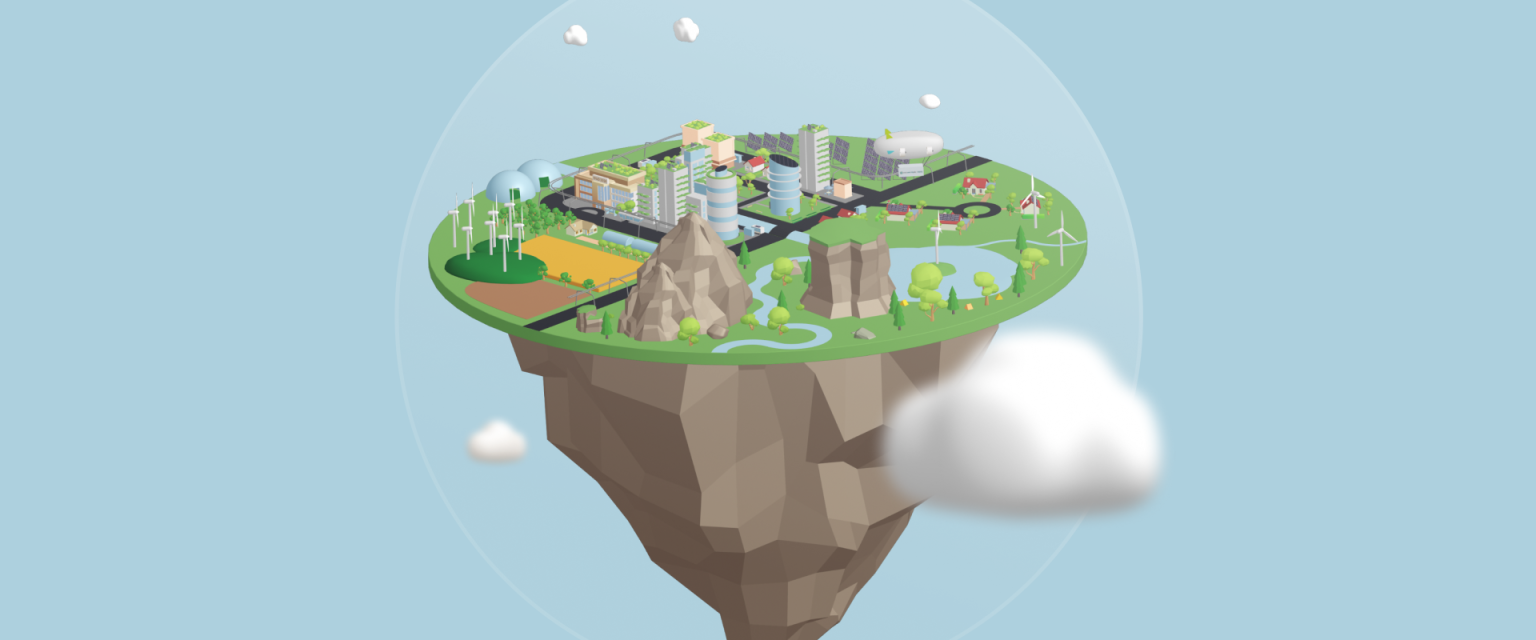
November 12, 2026 – Designing a Sustainable Future with Ethical AI

Paulinum – Auditorium and St. Pauli University Church

Days
Hours
minutes
seconds

This marks the 10th time we’ve hosted World Usability Day in Leipzig—an anniversary that highlights just how vibrant the UX and design community is in our city. And once again, we’ll be celebrating at a special venue: on November 12 at the Paulinum at the University of Leipzig.


In 2026, the WUD will focus on a question that concerns us all: How do we design technology that truly makes a positive impact? AI makes knowledge more accessible, participation more tangible, and opens up entirely new ways to address societal challenges. At the same time, it raises genuine ethical questions about values, responsibility, resource consumption, and fairness—issues we shouldn’t leave to technology alone. That’s exactly what we want to discuss with you: openly, critically, and with a passion for design. Whether it’s a lecture, workshop, or creative format, every perspective is welcome at WUD Leipzig—from design, development, research, and society.


Come on by, bring your ideas, and celebrate 10 years of WUD in Leipzig with us!

Main Stage
Workshop
10:00
Main Stage
10:00 – 10:45
Laura Nielsen | New Monday, LLC
New Monday, LLC
Workshop
10:00 – 11:30
Tina Marschner & Ludwig Epple
IT Sonix Custom Development, LLC
11:35
Main Stage
11:40 – 12:10
Romina Kühn | TU Dresden
Nicole Filz | elevait GmbH & Co. KG.
Workshop
11:35 – 13:35
Christin Rahnfeld | Xitaso GmbH
Beatrice Behnisch | Cumulocity GmbH
14:00
Main Stage
14:00 – 14:30
Aaron Kokal | t-0
14:35
Main Stage
14:35 – 15:05
Richard Hohmuth | Incardias, TU Dresden
15:10
Main Stage
15:10 – 15:40
Richard Bretschneider | MAI
Workshop
14:00 – 15:30
Katharina Hammel, Nicole Filz, and Romina Kühn
UX Dresden - Regional Chapter of the German UPA
16:00
Main Stage
16:00 –17:00
Panel Discussion
17:15
Main Stage
17:15 – 18:30
Open Talk

Be a part of World Usability Day 2026 in Leipzig!​

For the past 10 years, the WUD has been bringing the community together, fostering dialogue, and sharing valuable insights with the general public. As a free event, it makes knowledge about usability and user experience accessible to everyone. To ensure this continues in 2026, we need your support!

Whether as a sponsor or a partner—your contribution will help make this event a reality, one that puts usability and user experience front and center. Let’s work together to make the digital world more accessible and user-friendly!

With your support, you not only help fund our WUD, but also contribute to strengthening Leipzig as an attractive IT hub for research and innovation.

Join us and help make a difference for a better user experience!

Stay up to date

For the latest news, visit

WUD Recap

World Usability Icon

WUD 2025

Emerging Technologies and the Human Experience

WUD 2024

Designing for a Better World

WUD 2023

Collaboration & Cooperation
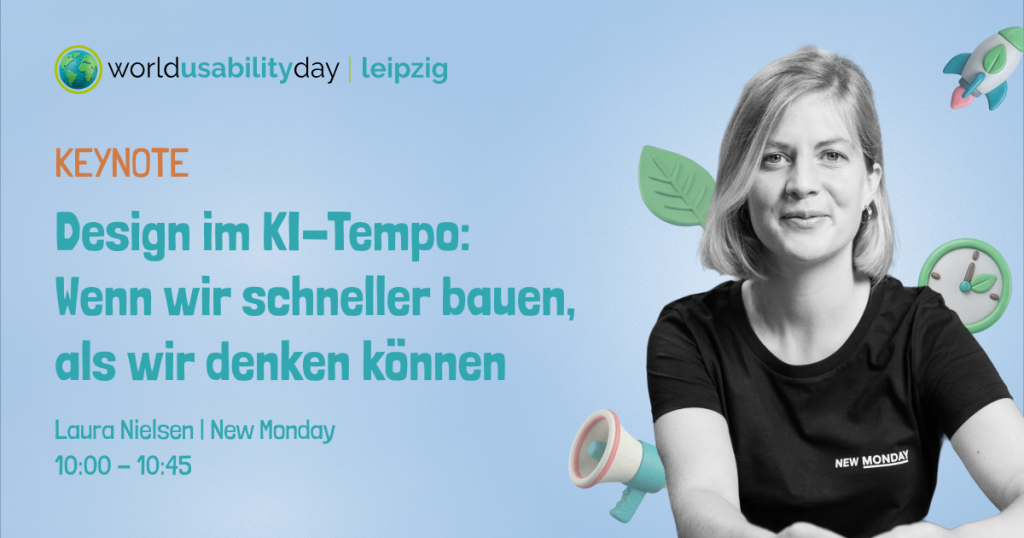
Keynote: Design at the Speed of AI: If we build faster,
more than we can imagine

Laura Nielsen | New Monday
10:00 – 10:45
Today, AI makes it possible to generate music at the push of a button, imitating any musical style or artist. This raises questions about authenticity and the very concept of an artist. The presentation demonstrates how AI opens up new creative possibilities for musicians, for example through intelligent interfaces, hand tracking, or automated sound organization. AI can optimize the user experience and make the technology invisible in order to foster pure creativity.
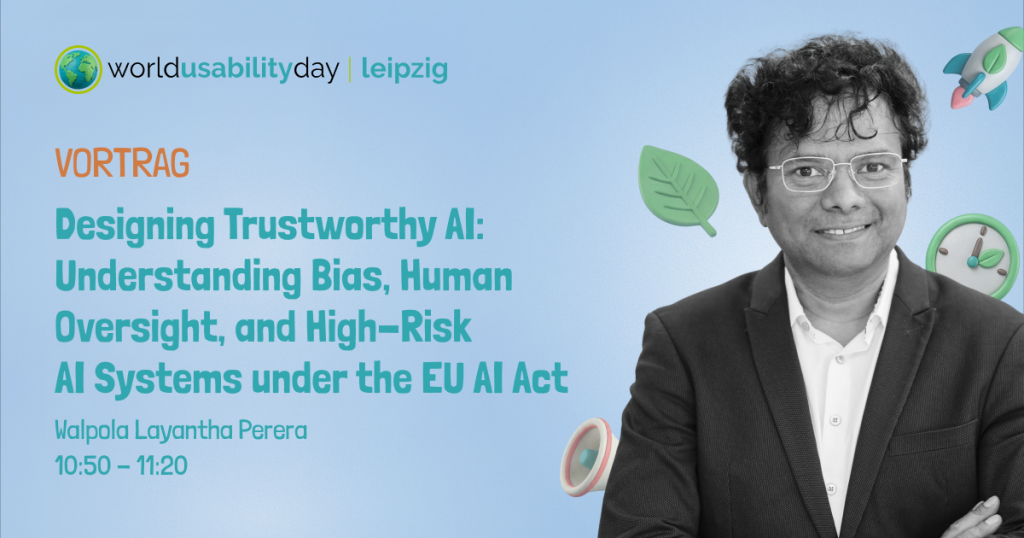
Designing Trustworthy AI: Understanding Bias, Human Oversight, and High-Risk AI Systems Under the EU AI Act
Walpola Layantha Perera
10:50-11:20
Artificial intelligence is increasingly being used in areas that directly affect people’s lives, from recruitment and education to healthcare and transportation. In this talk, I will explore how AI bias can arise and why human oversight is essential for trustworthy AI. I will also introduce the EU AI Act’s approach to high-risk AI systems and explain some of the key responsibilities for organizations. The session will offer a practical perspective on how innovation, human rights, ethics, and responsible AI governance can work together.
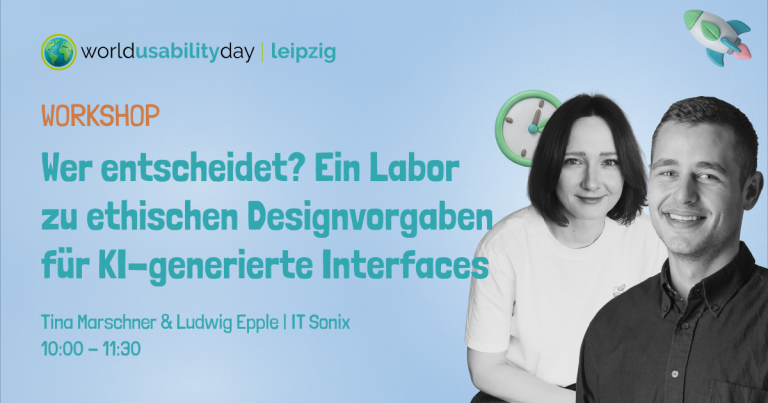
Who Decides? A Lab on Ethical Design Guidelines for AI-Generated Interfaces
Tina Marschner & Ludwig Epple | IT Sonix Custom Development, LLC
10:00-11:30

AI tools generate interfaces in minutes—and sometimes dark patterns as well: hidden costs, pre-selected extras, and cancellation processes that are a maze to navigate. Who actually decides which values are incorporated into AI-generated interfaces? And can ethical principles even be formulated in a way that an AI can follow them? We’re exploring these questions in an open lab. We’re working with Michael Buckley’s Ethical Interface Design Framework, which makes ethical tensions in design decisions visible. Together, we’ll test whether these considerations can be translated into a DESIGN.md file. Can we create a design guideline that AI agents will follow?
Come to the lab and let's figure it out!

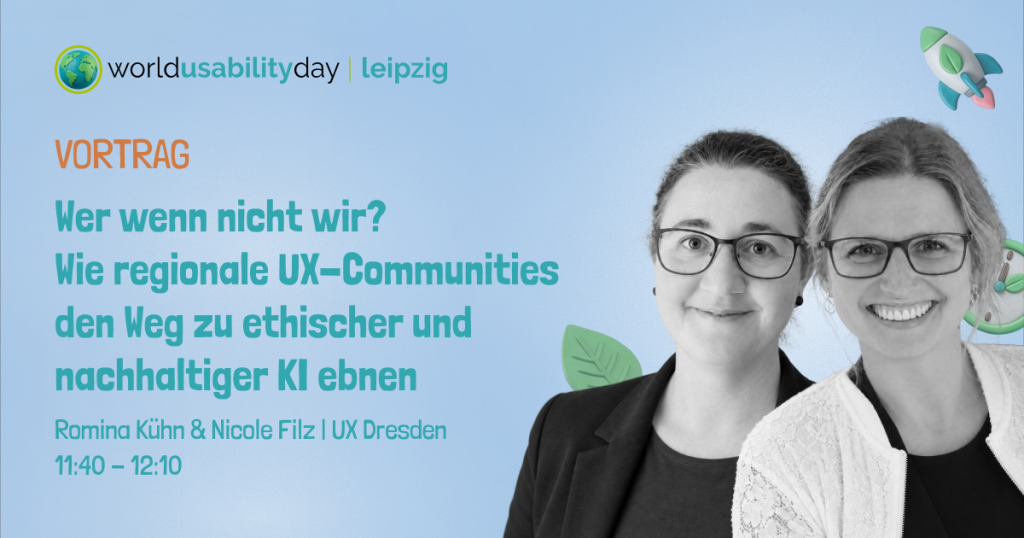
Who, if not us? How regional UX communities are paving the way for ethical and sustainable AI
Romina Kühn | TU Dresden
Nicole Filz | elevait GmbH & Co. KG.
11:40-12:10
„We have to do something with AI.“—We hear this phrase often, but does it really lead to sustainable and human-centered solutions? How can we maintain a commitment to the ethical and responsible use of technology in our day-to-day project work? In this presentation, the Dresden regional group of the German UPA will show how strong local UX communities serve as spaces that enable us to collectively grapple with uncomfortable questions and set standards for good design throughout Central Germany.

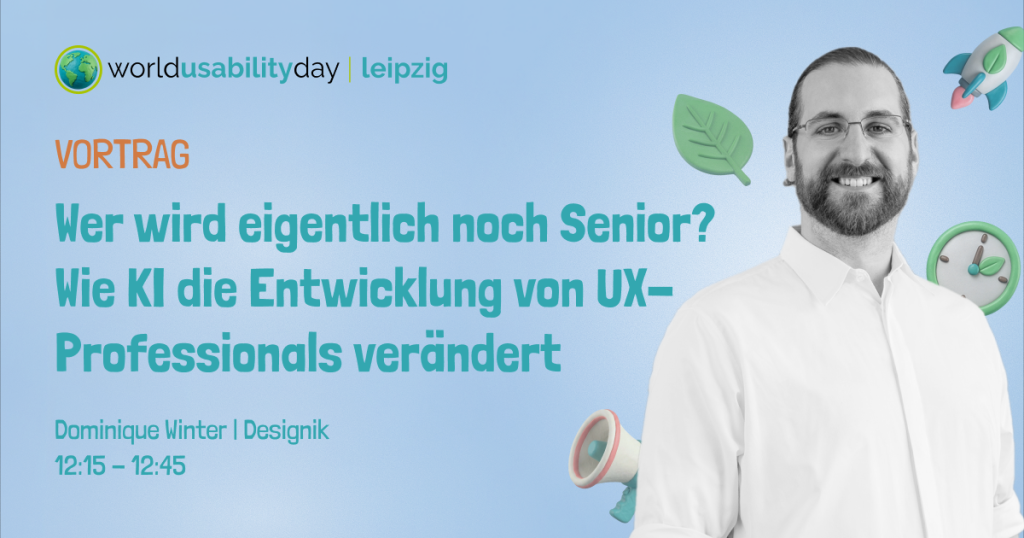
Who Actually Qualifies as a "Senior" These Days? How AI Is Changing the Career Paths of UX Professionals
Dominique Winter | Designik

12:15-12:45

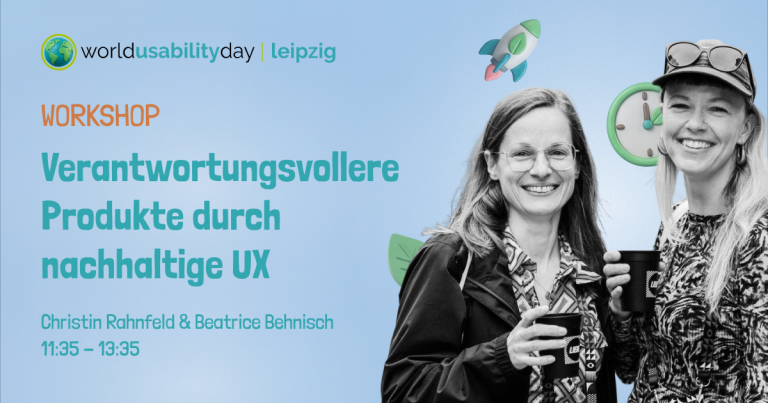
More Responsible Products Through Sustainable UX
Christin Rahnfeld | Xitaso GmbH
Beatrice Behnisch | Cumulocity
11:35-13:35
How can we develop digital products that not only meet the needs of users and businesses, but also take into account the environment, society, and future generations? In this interactive workshop, participants will broaden their perspective on digital products and learn to systematically identify the ethical and environmental implications of product decisions.
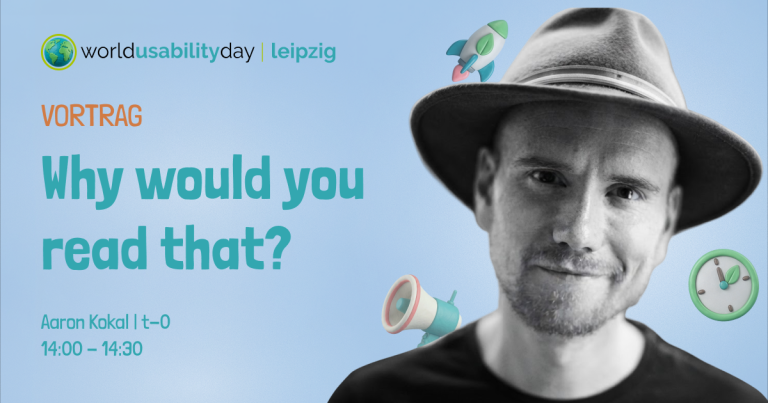
Why would you read that?
Aaron Kokal | t-0
14:00-14:30
When we talk about ethical AI, we usually focus on the models. This talk addresses something closer to home: the moment you hand AI-assisted work to a colleague. Unchecked AI output reads fluently but contains errors in the details, and the recipient bears the burden of identifying those problems. Aaron Kokal of the AI transformation agency T-0 discusses the consequences for competence, ownership, and communication, as well as the need for a culture of AI use based on mutual respect.
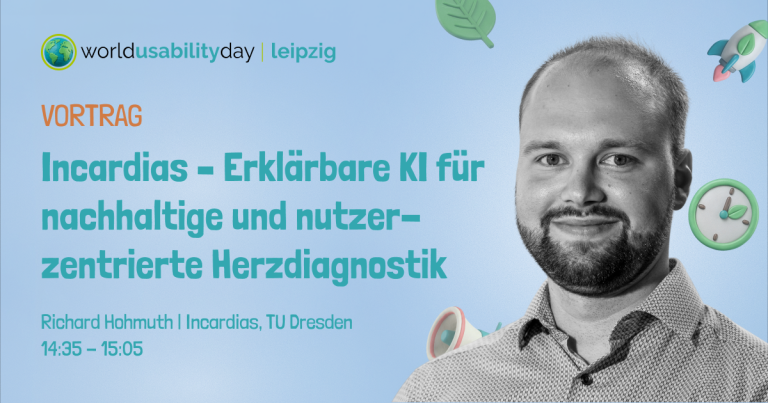
Incardias – Explainable AI for Sustainable and User-Centered Cardiac Diagnostics
Richard Hohmuth | Incardias, TU Dresden
14:35-15:05
How can AI support medical diagnostics in a way that is understandable, reliable, and user-centered? The medtech startup project incardias, based at TU Dresden, is developing explainable AI to assist doctors in interpreting ECG data. In doing so, incardias combines technological innovation with key considerations from UX and usability: trust, transparency, and responsible design.
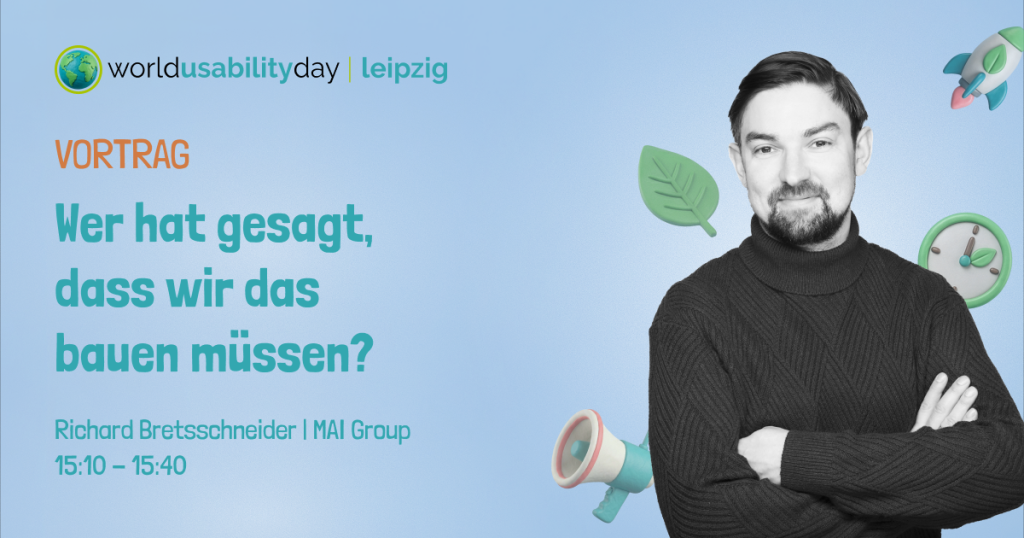
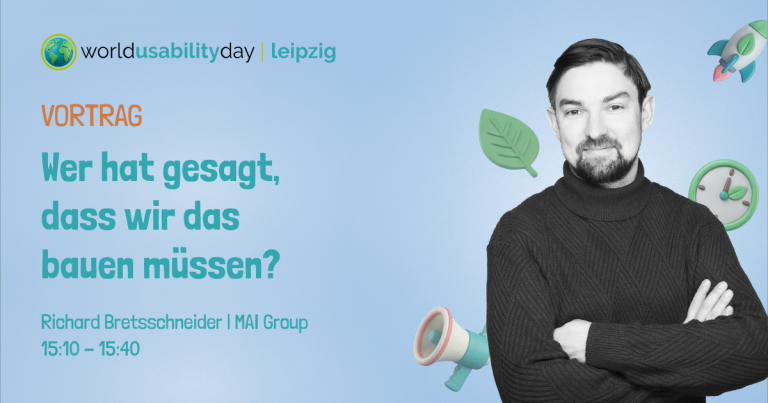
Who said we have to build this?
Richard Bretschneider | MAI Group
15:10-15:40

„Don't tell me whether the usability is good. Tell me whether I'm making a good investment of one million euros a year with this feature.“

This question fundamentally changes the role of UX. When UX isn’t just supporting the team but is also involved in decision-making, our first task is to figure out whether we should even build a new idea or whether an existing feature should stay as is. This talk takes you through real-life situations that Richard Bretschneider experienced in his early days as Head of UX, without a playbook to guide him. He shares ideas that will help you, as a UX professional, gain more influence within your organization.

What kind of AI future is worth it to us?
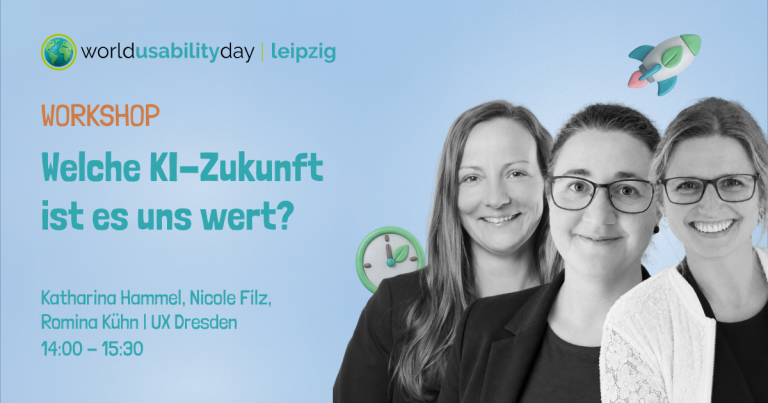
Katharina Hammel, Nicole Filz & Romina Kühn | UX Dresden
14:00-15:30

Using LEGO® to Navigate Between Vision, Resources, and Responsibility. How do we decide when AI is truly the right solution? In our interactive LEGO® workshop, we explore personal values and various possible futures for AI. Together, we highlight the benefits to humans as well as the environmental and societal costs. What values help us decide where AI can meaningfully support us—and where responsibility and decision-making should remain with humans?

Who Decides? A Lab on Ethical Design Guidelines for AI-Generated Interfaces
Tina Marschner & Ludwig Epple | IT Sonix Custom Development, LLC
10:00-11:30

AI tools generate interfaces in minutes—and sometimes dark patterns as well: hidden costs, pre-selected extras, and cancellation processes that are a maze to navigate. Who actually decides which values are incorporated into AI-generated interfaces? And can ethical principles even be formulated in a way that an AI can follow them? We’re exploring these questions in an open lab. We’re working with Michael Buckley’s Ethical Interface Design Framework, which makes ethical tensions in design decisions visible. Together, we’ll test whether these considerations can be translated into a DESIGN.md file. Can we create a design guideline that AI agents will follow?

Come to the lab and let's figure it out!

Who said we have to build this?
Richard Bretschneider | MAI Group
15:10-15:40

”Don't tell me whether the usability is good. Tell me whether I'm making a good investment of one million euros a year with this feature."

This question fundamentally changes the role of UX. If UX isn't just supporting the process but is also involved in decision-making, our first task is to determine whether we should even build a new idea or whether an existing feature should remain.

This talk takes you through real-life situations that Richard Bretschneider experienced in his early days as Head of UX, without a playbook to guide him. He shares ideas that will help you, as a UX professional, gain more influence within your organization.
